
Overview of Kidney Function Test (KFT)
A Kidney Function Test (KFT), also known as a renal panel, is a group of blood and urine tests that assess how well your kidneys are working. Your kidneys are vital organs responsible for filtering waste products, excess salts, and water from your blood, maintaining electrolyte balance, and producing hormones. KFTs measure various markers, including creatinine, urea nitrogen (BUN), and electrolytes (sodium, potassium, chloride, bicarbonate), and sometimes glomerular filtration rate (GFR). These tests help determine if your kidneys are efficiently removing waste and maintaining the body's chemical balance. Abnormal results can indicate kidney disease, dehydration, or other conditions affecting kidney health, making early detection crucial for management.
Why it's done
Kidney function tests are performed for several critical reasons, primarily to screen for, diagnose, and monitor kidney diseases. They are essential if you experience symptoms that might suggest kidney problems, such as swelling in the hands or feet, changes in urination frequency, fatigue, or muscle cramps. KFTs are also commonly ordered for individuals with risk factors for kidney disease, including diabetes, high blood pressure, heart disease, or a family history of kidney failure. They are vital for monitoring the progression of existing kidney conditions, assessing the effectiveness of treatments, and checking for kidney damage caused by certain medications or conditions that affect kidney blood flow.
How should I prepare for the Kidney Function Test?
Preparation for a Kidney Function Test (KFT) generally involves a few specific instructions to ensure accurate results. For most KFTs, you may be asked to fast for 8 to 12 hours before the blood test, meaning no food or drinks other than water. It's crucial to confirm this with your healthcare provider, as some specific components of the KFT might not require fasting. You should also inform your doctor about any medications, supplements, or herbal remedies you are currently taking. Certain drugs, particularly those affecting kidney function or urine output, might need to be temporarily stopped or adjusted before the test. Avoid strenuous exercise prior to the test, as it can temporarily affect creatinine levels.
What does the equipment look like?
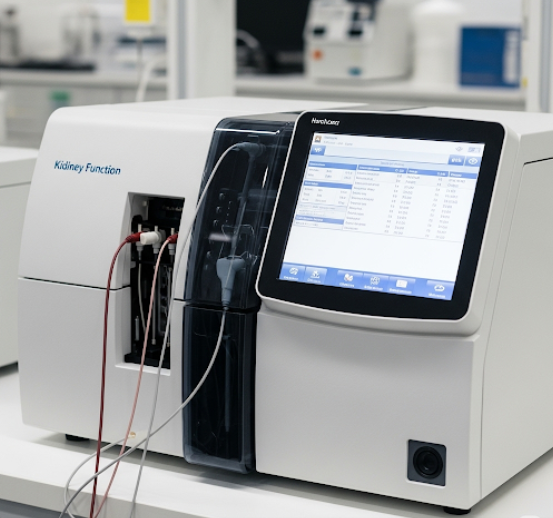
The equipment for a Kidney Function Test (KFT) primarily involves the standard setup for a blood draw (venipuncture) and, sometimes, equipment for urine collection. For the blood draw, this includes a sterile needle, a syringe or a vacutainer system, and specific blood collection tubes (often plain red-top or gel-separator tubes). For urine tests, a sterile urine collection cup is provided. Once collected, both blood and urine samples are transported to a medical laboratory. There, sophisticated automated chemistry analyzers are used. These large, high-throughput machines process the samples to measure levels of creatinine, BUN, electrolytes, and other specific markers, providing precise quantitative results that reflect kidney function.
How does the procedure work?
The procedure for a Kidney Function Test involves collecting either a blood sample, a urine sample, or both. For blood tests, a sample is drawn from a vein, typically in your arm. This blood is then analyzed in a lab to measure waste products like creatinine and BUN, and electrolyte levels. For urine tests, you will provide a urine sample, which is then analyzed for protein, blood, and other substances that can indicate kidney damage. The key principle is to assess how effectively the kidneys are filtering waste from the blood and concentrating urine. Calculations like Glomerular Filtration Rate (GFR) are often estimated from creatinine levels, providing a clearer picture of kidney filtering capacity.
How is the procedure performed?
A Kidney Function Test is performed by drawing a blood sample through venipuncture and, if required, collecting a urine sample. For the blood draw, a healthcare professional will clean an area, usually on the inside of your elbow, with an antiseptic. A tourniquet may be applied to make the vein more visible. A sterile needle is then gently inserted into the vein to draw blood into specific collection tubes. Once sufficient blood is obtained, the needle is removed, and pressure is applied to the site. For the urine test, you will be given instructions on how to collect a clean-catch urine sample. Both samples are then sent to a laboratory for analysis.
What will I experience during and after the procedure?
During the blood draw for a KFT, you will likely feel a brief, sharp prick or sting as the needle is inserted into your arm. Some individuals may experience a mild sensation of pressure or discomfort while the blood is being collected. The blood draw itself is usually very quick, lasting only a few minutes. If a urine sample is required, the process is non-invasive and painless. After the blood draw, light pressure will be applied to the puncture site to help stop any bleeding. You might experience minor soreness, tenderness, or a small bruise in the arm, which is normal and typically resolves quickly. You can usually resume your normal activities immediately after the test, provided no fasting was required.
Who interprets the results and how do I get them?
Your blood and/or urine samples for a KFT are analyzed by medical laboratory technicians. Once the analysis is complete, a detailed report summarizing the levels of creatinine, BUN, electrolytes, and other relevant markers (including estimated GFR) is generated. This report is then sent to your healthcare provider, typically your general practitioner or a nephrologist (kidney specialist). Your doctor, who is experienced in interpreting these complex medical results, will review your KFT values and compare them against established normal reference ranges. They will discuss these findings with you, explain what the results indicate about your kidney health, and recommend any necessary follow-up actions, such as lifestyle changes, medication adjustments, or further diagnostic tests.
Benefits
Kidney Function Tests offer significant benefits as a crucial diagnostic and monitoring tool for kidney health. They are non-invasive and can provide early detection of kidney disease or dysfunction, often before visible symptoms appear, allowing for timely intervention and better treatment outcomes. KFTs are essential for identifying various conditions such as acute kidney injury, chronic kidney disease, and imbalances in electrolytes. They also play a vital role in monitoring the progression of known kidney diseases, assessing the effectiveness of treatments, and evaluating potential kidney side effects of medications, particularly for individuals with pre-existing conditions like diabetes or hypertension.
Risks
The risks associated with a Kidney Function Test are minimal, as it primarily involves a routine blood draw and/or urine collection. For the blood draw, the most common minor risks include slight pain, soreness, or tenderness at the puncture site. Some individuals may experience minor bruising, which usually resolves within a few days. Dizziness or lightheadedness can occasionally occur during or immediately after the blood draw, particularly in those sensitive to needles or prone to fainting. Very rarely, there might be a small risk of infection at the puncture site if proper sterile techniques are not followed, or excessive bleeding, especially for individuals who are taking blood-thinning medications. Urine collection carries virtually no risks.
What are the limitations of a KFT?
While highly informative, Kidney Function Tests do have some limitations. KFTs provide an assessment of kidney function at a specific point in time, and results can be influenced by various factors such as hydration status, diet (especially protein intake), muscle mass, certain medications, and strenuous exercise before the test. For instance, creatinine levels can vary based on muscle mass, making interpretation complex in some individuals. While KFTs indicate kidney damage or reduced function, they don't always pinpoint the exact cause of the problem without further specialized tests (e.g., kidney ultrasound, biopsy). Early-stage kidney disease may also not show significant changes in routine KFTs, necessitating careful monitoring over time, especially for at-risk individuals.