
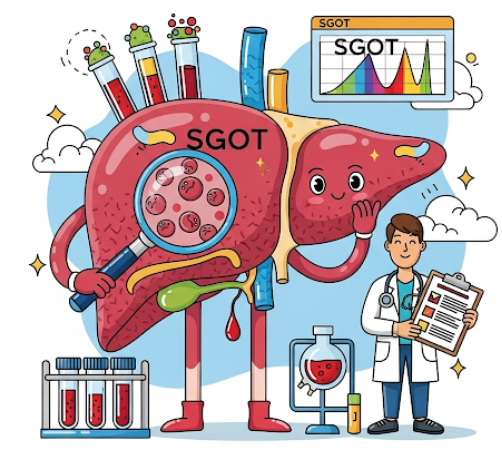
Overview of the SGOT Test
The SGOT test, which stands for Serum Glutamic-Oxaloacetic Transaminase, is a crucial blood test that measures the level of this enzyme in the bloodstream. SGOT is more commonly known by its alternative name, Aspartate Aminotransferase (AST). This enzyme is found in various tissues throughout the body, with significant concentrations in the liver, heart, skeletal muscles, kidneys, and brain. Under normal, healthy conditions, SGOT levels in the blood are relatively low. However, when cells in any of these organs are damaged or injured, SGOT leaks from the compromised cells into the bloodstream, leading to elevated levels. Therefore, an increased SGOT (AST) level serves as an indicator of tissue damage, commonly used to assess liver health but also to detect injury to other organs like the heart (e.g., after a heart attack) or muscles (e.g., due to trauma or disease). While SGOT is a valuable marker, it is often interpreted in conjunction with other liver enzymes, particularly SGPT (ALT), for a more precise diagnosis of liver-specific issues.
Why the SGOT Test is Done
The SGOT (AST) test is performed for several key diagnostic and monitoring purposes. Its primary application is to evaluate potential liver damage or disease, often as part of a comprehensive liver function panel. Doctors may order an SGOT test if a patient exhibits symptoms suggestive of liver problems, such as jaundice, fatigue, nausea, vomiting, or abdominal pain. It's also recommended for individuals with risk factors for liver disease, including a history of heavy alcohol consumption, obesity, diabetes, or exposure to hepatitis viruses. Beyond liver assessment, the SGOT test is valuable in identifying damage to other organs where the enzyme is abundant. For instance, it is a key marker used to detect heart muscle injury, particularly after a suspected heart attack. Additionally, it can help in diagnosing muscle disorders or injuries. The test also serves to monitor the progression of known conditions affecting these organs or to assess the efficacy and potential side effects of medications that can impact liver or muscle health.
Risks
The risks associated with undergoing an SGOT (AST) test are minimal, mirroring those of any standard blood draw (venipuncture). These risks are typically localized and transient. You might experience a slight, momentary pain or discomfort during the needle insertion. Minor bruising at the site where the blood was drawn is also common, which usually resolves within a few days without intervention. Some individuals may feel lightheaded or dizzy after the blood collection, particularly if they are sensitive to needles or prone to fainting; resting briefly and drinking water can help alleviate this. In very rare instances, a small collection of blood under the skin (hematoma) might form, or there could be a minuscule risk of infection at the puncture site if proper sterile techniques are not strictly followed. While excessive bleeding is uncommon, it is a point of consideration for individuals on anticoagulant medications. Overall, these potential complications are infrequent, generally mild, and do not lead to any long-term health concerns.
How You Prepare
Generally, preparation for an SGOT (AST) test is quite straightforward and often does not require fasting. You can typically eat and drink as you normally would before the blood draw. However, it is always crucial to confirm specific instructions with your healthcare provider or the laboratory, as preparation requirements may vary if other blood tests are being performed concurrently that do necessitate fasting (e.g., a full lipid panel). It is vital to inform your doctor about all medications, over-the-counter drugs, herbal remedies, and nutritional supplements you are currently taking. Certain drugs, especially those known to affect liver function, can influence SGOT levels and potentially impact the accuracy of your results. Additionally, strenuous physical activity immediately preceding the test can temporarily elevate SGOT levels, so it's advisable to avoid intense exercise for at least 24 hours prior to the test. Providing a complete and accurate medical history and medication list to your doctor ensures the most precise interpretation of your SGOT results within the context of your overall health.
What You Can Expect
Before the Test
Before your SGOT (AST) test, your primary step is to consult your healthcare provider for any specific preparatory instructions. While typically no fasting is required for SGOT alone, it's essential to confirm this, especially if other blood tests are scheduled simultaneously. You should ensure your doctor is fully aware of all medications, including over-the-counter drugs and supplements, you are currently taking, as some can influence liver enzyme levels. It's also advisable to avoid strenuous physical activity for at least 24 hours prior to the test, as intense exercise can cause temporary elevations in SGOT. On the day of your appointment, you can generally eat and drink as usual, unless otherwise instructed. Arriving at the clinic or laboratory feeling relaxed and well-hydrated will contribute to a smooth and comfortable blood collection process, setting the stage for accurate test results.
During the Test
During the SGOT (AST) test, you will undergo a standard and typically quick blood collection procedure. You will be comfortably seated, usually in a chair with an armrest. A trained healthcare professional, such as a phlebotomist or nurse, will carefully identify a suitable vein, most commonly located in the crook of your arm or, occasionally, on the back of your hand. The chosen skin area will be meticulously cleaned with an antiseptic wipe to ensure sterility and minimize any risk of infection. To make the vein more prominent and facilitate the blood draw, a tourniquet may be gently applied around your upper arm. Once the vein is prepared, a sterile, single-use needle will be carefully inserted. You will likely experience a brief, sharp prick or a mild stinging sensation as the needle enters the vein. Blood will then be steadily drawn into one or more small collection tubes. The actual blood collection is usually very swift, often lasting only a few minutes. After the necessary amount of blood is obtained, the tourniquet is released, and the needle is smoothly withdrawn, followed by immediate pressure to the puncture site with a cotton ball or gauze.
Results
After your blood sample for the SGOT (AST) test is collected, it is promptly sent to a medical laboratory for precise analysis. Laboratory technologists will accurately measure the concentration of aspartate aminotransferase enzyme in your blood. Once the analysis is complete, a detailed report containing your SGOT (AST) level, typically expressed in units per liter (U/L), will be generated. This report is then transmitted to your healthcare provider, usually within a few days. Your doctor will interpret these results in the context of established normal ranges, which generally fall between 8 to 48 U/L, though slight variations can occur depending on the specific laboratory and individual factors like age and gender. Elevated SGOT levels can indicate damage to the liver, heart, or muscles. Your doctor will discuss the findings with you, explaining what your SGOT level means for your health, and based on these results and your complete medical history, they will recommend any necessary follow-up actions, such as further diagnostic tests, lifestyle modifications, or treatment to address any underlying conditions.