
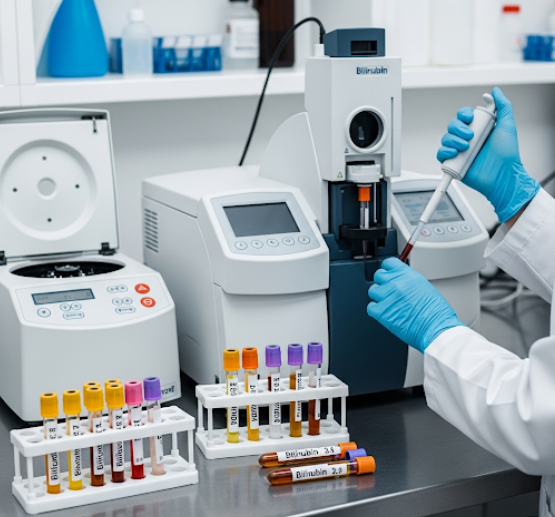
Overview of the Bilirubin Test in Liver
The bilirubin test is a vital blood examination that meticulously measures the levels of bilirubin, a distinct yellowish pigment, present in your bloodstream. Bilirubin is a natural and expected byproduct, specifically formed during the body's physiological process of breaking down old and worn-out red blood cells. Once red blood cells reach the end of their approximately 120-day life cycle, a component within them called heme is converted into an initial form known as unconjugated (indirect) bilirubin. This unconjugated bilirubin, which is not water-soluble, then embarks on a journey to the liver. Within the liver, it undergoes a critical process termed conjugation, where it is transformed into conjugated (direct) bilirubin, now made water-soluble. Following this transformation, the liver efficiently excretes this conjugated bilirubin into bile, a vital digestive fluid. The bile, containing bilirubin, subsequently passes into the intestines and is ultimately eliminated from the body, primarily through stool, imparting its characteristic brown color. A healthy and properly functioning liver is adept at efficiently processing and removing bilirubin from the system. However, if the liver incurs damage, becomes diseased, or if there's a blockage obstructing the flow within the bile ducts, bilirubin can dangerously accumulate in the blood. Such elevated levels often manifest visually as jaundice, a distinct yellowing of the skin and whites of the eyes. Consequently, the bilirubin test stands as a critical and sensitive indicator of liver function and potential underlying hepatic or biliary issues.
Why the Bilirubin Test is Done for Liver Health
The bilirubin test serves as a cornerstone in the comprehensive assessment of liver health and is indispensable for accurately diagnosing a diverse range of liver-related conditions. Healthcare providers frequently order this test when there's a clinical suspicion of liver disease, which may be suggested by various symptoms such as the conspicuous yellowing of the skin and eyes (jaundice), abnormally dark urine, unusually pale stools, inexplicable chronic fatigue, persistent nausea, vomiting episodes, or discomfort from abdominal pain or swelling. This crucial test systematically helps in several key diagnostic areas. It significantly aids in diagnosing specific liver diseases including various forms of hepatitis (inflammation of the liver), cirrhosis (characterized by severe scarring of the liver tissue), non-alcoholic or alcoholic fatty liver disease, and even advanced stages of liver failure. Furthermore, elevated conjugated bilirubin levels are a strong indicator of potential obstructions within the bile ducts, which can be caused by the presence of gallstones, various types of tumors, or inflammatory processes, all of which impede the normal outflow of bile from the liver. For individuals with previously diagnosed liver conditions, the bilirubin test is invaluable for monitoring the effectiveness of ongoing treatments or tracking the progressive course of the disease over time. In cases where red blood cells are breaking down too rapidly (hemolytic anemia), leading to an overload of unconjugated bilirubin that overwhelms the liver's processing capacity, this test can provide key insights. It is also crucially performed to screen and monitor bilirubin levels in newborns, as excessively high levels can cause brain damage if left untreated. Collectively, the bilirubin test provides essential and comprehensive insights into the efficiency of your liver's vital metabolic and excretory functions.
Risks
The risks associated with undergoing a bilirubin test are remarkably minimal, as the procedure itself is limited to a routine blood draw, medically termed venipuncture. Any potential minor risks are typically transient and almost exclusively localized to the site where the needle is inserted. Common, mild side effects that an individual might experience include a brief, stinging sensation or mild pain during the needle insertion, and possibly some tenderness at the puncture site afterward. It is also fairly common for a small bruise to form at the site where the blood was drawn; these bruises are generally harmless and typically resolve on their own within a few days. Some individuals, particularly those who are sensitive to needles or have a predisposition to fainting, might experience transient dizziness or lightheadedness either during or immediately after the blood draw, though this is usually brief. In very rare instances, a small collection of blood under the skin, known as a hematoma, might form if bleeding persists beneath the skin. The risk of infection at the puncture site is exceedingly rare when strict adherence to proper sterile techniques is maintained throughout the procedure. While excessive bleeding from the puncture site is uncommon, it is a point of consideration and vigilance for individuals who are currently taking anticoagulant (blood-thinning) medications. For newborns, where blood is usually collected via a heel stick, minor bruising may also occur. Overall, these potential risks are infrequent, generally mild, and do not typically lead to any long-term health complications.
How You Prepare
Preparing for a bilirubin test is generally straightforward, though specific instructions from your healthcare provider should always be prioritized. In most typical scenarios, fasting is a mandatory requirement for 9 to 12 hours prior to the scheduled blood draw. This crucial directive means that you must abstain from consuming any food or beverages, with the sole exception of plain water, during this designated fasting period. Strict adherence to this fasting protocol is paramount because certain foods and drinks possess the capacity to temporarily influence bilirubin levels, potentially leading to inaccurate or misleading test results. Furthermore, it is absolutely essential to thoroughly inform your healthcare provider about all medications you are currently taking, encompassing prescription drugs, over-the-counter remedies, herbal preparations, and any dietary supplements. This is critical because a range of medications, including certain types of antibiotics, oral contraceptives, diuretics, and even some sedatives, are known to have an impact on bilirubin levels and might necessitate temporary discontinuation or dosage adjustment prior to the test, but this must only be done under the explicit guidance of your doctor. Additionally, engaging in strenuous physical activity immediately before the test is generally discouraged, as intense exercise might also temporarily influence results. By diligently following all specific instructions provided by your doctor or the designated laboratory, you significantly contribute to ensuring the most accurate and reliable outcome from your bilirubin test.
What You Can Expect
Before the Test
Before your bilirubin test, your primary responsibility will be to diligently adhere to any preparatory instructions issued by your healthcare provider. This usually involves a crucial fasting period of 9 to 12 hours prior to the scheduled blood draw, during which only plain water is permissible for consumption. It is absolutely essential to ensure that you have communicated a complete list of all current medications, including any over-the-counter drugs and supplements, to your doctor, as certain substances can directly affect bilirubin levels. If advised to temporarily discontinue any medication, ensure this is done strictly under medical supervision. It's also wise to avoid alcohol consumption for at least 24 hours before the test. On the day of your appointment, aim to arrive at the clinic or laboratory feeling rested and calm. If you tend to experience anxiety about blood draws, informing the phlebotomist beforehand can be helpful, as they can take steps to make the process more comfortable for you. These meticulous preparatory steps are critical for safeguarding the integrity and accuracy of your test results, helping to ensure that the blood sample accurately reflects your true bilirubin levels.
During the Test
During the bilirubin test, you will undergo a routine and generally quick blood collection procedure, medically known as venipuncture. You will be comfortably seated, typically in a specialized phlebotomy chair designed for patient comfort and ease of access to your arm. A trained healthcare professional, such as a phlebotomist or a nurse, will meticulously identify a suitable vein, most commonly situated in the crook of your arm (antecubital fossa) or, occasionally, on the back of your hand. The chosen skin area will then be thoroughly cleansed with an antiseptic wipe to maintain rigorous sterility and effectively minimize any risk of infection. To make the vein more prominent and facilitate easier access, a tourniquet may be gently applied around your upper arm, which temporarily increases blood flow to the selected vein. Once the vein is clearly visible and adequately prepared, a sterile, single-use needle will be carefully inserted. You are likely to experience a brief, sharp prick or a mild stinging sensation as the needle penetrates the skin. Blood will then be steadily drawn into one or more small, specific collection tubes. The actual process of blood collection is typically very swift, usually concluding within just a few minutes. After the necessary amount of blood is obtained, the tourniquet is released, and the needle is smoothly withdrawn, followed by immediate pressure applied to the puncture site with a clean cotton ball or gauze to stop any bleeding.
Results
After your blood sample for the bilirubin test is meticulously collected, it is promptly dispatched to a medical laboratory for precise and comprehensive analysis. Within the lab, technologists will accurately measure your total bilirubin level, and often also differentiate between direct (conjugated) and indirect (unconjugated) bilirubin concentrations. Once the analytical process is complete, a detailed report containing these crucial values, typically expressed in milligrams per deciliter (mg/dL) or micromoles per liter (µmol/L), will be meticulously generated. This report is then securely transmitted to your healthcare provider, generally within a few days. Your doctor, leveraging their extensive medical expertise and clinical insight, will then meticulously interpret these results. They will carefully compare your individual bilirubin levels against established normal reference ranges. For adults, typical total bilirubin levels usually fall between 0.1 to 1.2 mg/dL, with direct bilirubin ideally less than 0.3 mg/dL, although it's important to note that these ranges can exhibit slight variations among different laboratories. Higher than normal bilirubin levels can be indicative of underlying liver damage, a blockage in the bile ducts, or an accelerated breakdown of red blood cells. Your doctor will engage in a thorough discussion of these findings with you, providing a clear explanation of what your bilirubin levels signify regarding your liver health and overall well-being. Based on these results and a comprehensive review of your complete medical history, they will recommend any necessary follow-up actions, which might include further diagnostic tests, specific lifestyle modifications, or targeted treatments to effectively address the underlying cause of any abnormal bilirubin levels detected.