
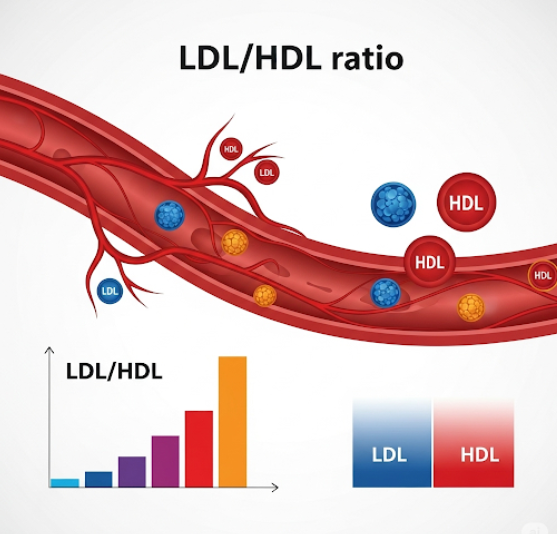
Overview of the LDL/HDL Ratio Test
The LDL/HDL ratio is a key indicator derived from a standard lipid panel, providing a more detailed insight into cardiovascular health beyond individual cholesterol numbers. It's calculated by dividing your low-density lipoprotein (LDL) cholesterol level by your high-density lipoprotein (HDL) cholesterol level. LDL is often termed "bad" cholesterol because high levels contribute to plaque buildup in arteries, increasing the risk of heart disease and stroke. Conversely, HDL is considered "good" cholesterol as it helps remove excess cholesterol from the bloodstream, protecting arteries. This ratio reflects the balance between these two types of lipoproteins. A lower ratio signifies a healthier balance, indicating a reduced risk of plaque formation and improved cardiovascular well-being. It is a valuable tool for assessing risk and guiding strategies for lipid management and overall heart health.
Why the LDL/HDL Ratio Test is Done
The LDL/HDL ratio test is performed to provide a more precise assessment of an individual's risk for cardiovascular diseases, including heart attack and stroke. While separate LDL and HDL measurements are important, their ratio offers a clearer picture of the overall cholesterol balance. A high LDL/HDL ratio suggests an unfavorable lipid profile, where there's an excess of harmful LDL cholesterol relative to protective HDL cholesterol. This imbalance significantly increases the likelihood of atherosclerosis, the hardening and narrowing of arteries due to plaque accumulation. Healthcare providers often recommend this test as part of routine check-ups, especially for individuals with risk factors like family history of heart disease, obesity, diabetes, or high blood pressure. It helps clinicians identify those at higher risk who may benefit from lifestyle modifications or medical interventions to optimize their lipid profile and prevent future cardiac events.
Risks
The LDL/HDL ratio is a calculated value obtained from a standard lipid panel, which involves a routine blood draw (venipuncture). Consequently, the risks associated with this test are minimal and are those inherent to any blood collection procedure. These typically include minor discomfort at the puncture site, such as a brief stinging sensation or tenderness. A small bruise may form where the needle was inserted, but this usually resolves quickly. In rare instances, some individuals might experience lightheadedness or dizziness. Extremely uncommon complications, like infection at the site or excessive bleeding, can occur but are very rare when standard sterile techniques are followed. It is important to inform the healthcare professional if you are taking blood-thinning medications, as this might slightly increase the risk of bruising. Overall, the blood test required for the LDL/HDL ratio is a safe and well-tolerated diagnostic procedure.
How You Prepare
Proper preparation for the LDL/HDL ratio test is crucial for obtaining accurate results, as it relies on precise measurements of both LDL and HDL cholesterol. The most important step is to fast for 9 to 12 hours before your scheduled blood draw. This means abstaining from all food and beverages, except plain water. Fasting is critical because consuming food, particularly those high in fats, can temporarily elevate triglyceride levels, which can indirectly influence cholesterol calculations and thus affect the ratio's accuracy. You should also avoid alcohol for at least 24 hours prior to the test, as alcohol can significantly impact lipid levels. Inform your healthcare provider about all medications you are currently taking, including prescription drugs, over-the-counter remedies, and supplements. Your doctor may advise temporary adjustments to certain medications if they are known to affect lipid profiles, but always follow their specific instructions. Strenuous exercise immediately before the test should also be avoided.
What You Can Expect
Before the Test
Before your LDL/HDL ratio test, your healthcare provider will give you specific instructions to ensure accurate results. The primary instruction is to fast for 9 to 12 hours before your blood collection appointment. During this fasting period, only plain water is permitted; avoid all food, sugary drinks, coffee, tea, and other beverages. Fasting is essential because what you eat and drink can temporarily alter your cholesterol and triglyceride levels, which are components of the ratio. You will also typically be advised to avoid alcohol for at least 24 hours prior to the blood draw. It is crucial to openly communicate with your doctor about all medications, vitamins, and supplements you are currently taking, as some can influence lipid levels. Your physician may suggest temporary adjustments to certain medications, but always follow their direct guidance. Additionally, refrain from vigorous physical activity just before the test.
During the Test
During the blood collection for your LDL/HDL ratio test, the procedure is straightforward and similar to any routine blood draw. You will be seated comfortably, usually with your arm extended. A trained healthcare professional, such as a phlebotomist, will select a suitable vein, most commonly in the inside of your elbow. The chosen area will be cleaned with an antiseptic wipe to ensure sterility. A tourniquet may be gently applied around your upper arm to make the vein more prominent. Once the vein is prepared, a sterile, single-use needle will be carefully inserted. You might experience a quick, sharp prick or a mild stinging sensation. Blood will then be steadily drawn into one or more small collection tubes. The actual collection process is typically very brief, usually lasting only a few minutes. After sufficient blood is collected, the tourniquet will be released, and the needle smoothly withdrawn. Pressure will then be applied to the puncture site with a cotton ball or gauze to help stop any bleeding and prevent bruising.
Results
After your blood sample for the LDL/HDL ratio test is collected, it will be sent to a laboratory for analysis to determine your LDL and HDL cholesterol levels. Once these individual values are obtained, your LDL/HDL ratio will be calculated. The results, presented as a numerical value, will then be securely sent to your healthcare provider, typically within a few days. Your doctor will interpret your specific ratio in the context of established guidelines and your overall health. Generally, a lower ratio is considered more favorable. For instance, a ratio below 2.5 (or 3.5 in some guidelines) is often considered optimal, indicating a lower cardiovascular risk. A higher ratio suggests an increased risk of atherosclerosis and heart disease. Your healthcare provider will discuss your results, explain what they mean for your individual cardiovascular health, and integrate this information with your complete medical history, other lipid parameters, and lifestyle factors to recommend appropriate strategies. These may include dietary modifications, increased physical activity, weight management, or, if necessary, pharmacological interventions to improve your lipid profile and reduce your long-term cardiovascular risk.